
What Is Reverse Recruiting? How It Works in 2026
If you’ve spent weeks — or months — applying to job after job with barely a response, you’ve likely felt the core problem with the traditional job search: it puts all the work, and all the rejection, on you. Reverse recruiting exists specifically to fix that. This guide explains what it actually is, how it works, what it costs, and how to tell a good service from a weak one.
Curious what this looks like for a specific role? See our guides to remote hiring manager jobs, remote software engineer jobs, or remote registered nurse jobs.
What Reverse Recruiting Actually Means
In a traditional recruiting relationship, a recruiter works for the employer. Their job is to fill an open position, and their incentive is speed — get someone hired, move to the next role. You, the candidate, are essentially a means to that end.
Reverse recruiting flips that relationship entirely. The recruiter works for you. Instead of representing a company trying to fill a seat, a reverse recruiter represents your job search — sourcing roles that match your goals, submitting tailored applications on your behalf, reaching out directly to hiring managers, and managing the process end to end while you focus on interviews.
The incentive shift matters more than it might seem. A recruiter working for an employer wants a hire, fast. A recruiter working for you wants the right hire — one that matches your compensation targets, career trajectory, and actual goals, because your success is the entire point of the engagement.
Why This Model Has Grown So Fast
A few things pushed reverse recruiting from a niche idea into a real, mainstream category:
- Application volume has exploded. The average corporate opening now draws somewhere around 250 applications, with only a small fraction ever leading to an offer. Applying alone, at scale, has become genuinely inefficient.
- The search has become a second job. Active job seekers commonly spend 20-30 hours a week on their search — writing tailored resumes, tracking applications, following up — time most working professionals don’t have.
- Direct outreach outperforms cold applications. A large share of roles are filled through referrals and direct hiring-manager contact before — or instead of — ever going through a public job board. Reverse recruiters specialize in exactly that kind of outreach.
What a Reverse Recruiting Engagement Actually Looks Like
- Defining the search. A good reverse recruiter doesn’t hand you a generic intake form — they dig into target titles, industries, compensation floor, geographic preferences, and dealbreakers, including questions you may not have thought to ask yourself yet.
- Repositioning your materials. Your resume, LinkedIn profile, and application materials get rebuilt around what’s actually working in the current market for your target roles — not a generic template.
- Sourcing and applying. Instead of spray-and-pray applications, your recruiter targets roles that genuinely match your criteria and tailors each submission.
- Direct outreach. Beyond applications, a strong service reaches out directly to hiring managers and decision-makers, bypassing job boards where it makes sense.
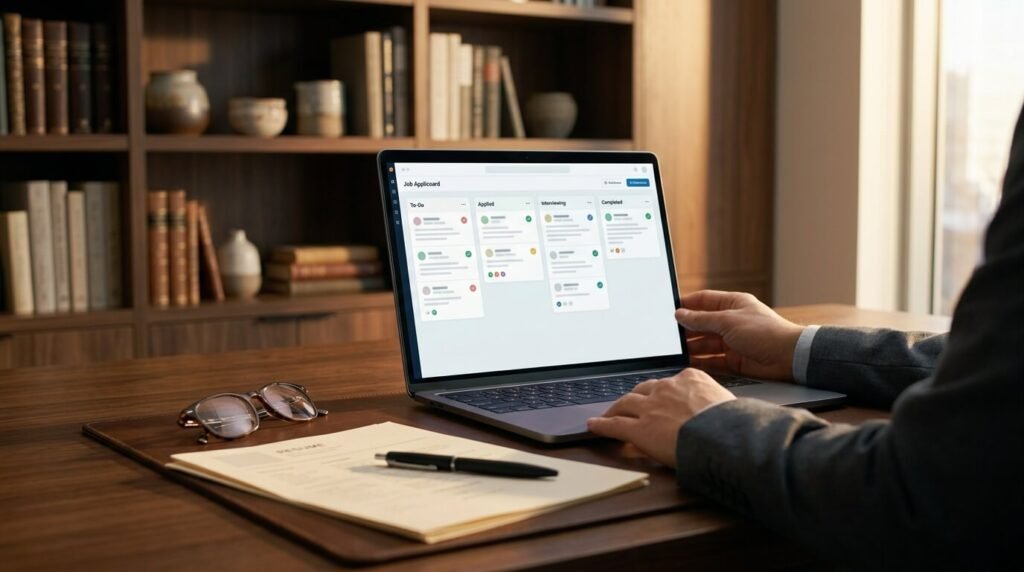
- Tracking and follow-up. Every application gets logged and followed up on — the administrative discipline most self-directed job seekers struggle to maintain at volume.
- Interview support. You stay in the loop throughout and step in specifically for interviews, with prep support from your recruiter along the way.
Some reverse recruiting is run by individual recruiters, while others
operate as a full reverse recruiting agency with a team structure.
Either can work well — what matters more is the specifics of the
process, not the label. (Some services also use the related term
“reverse headhunting” to describe the same model.)
What It Costs — and What to Watch For
Reverse recruiting isn’t one standardized thing. It ranges from genuine strategy-led, high-touch services to thinner “application volume” services that mostly automate submissions without real positioning work. When evaluating a provider, ask directly:
- Do they build a real search strategy, or just start submitting applications immediately?
- Do they do direct hiring-manager outreach, or only submit through job boards?
- Do they provide visibility into what’s actually being applied to and when?
- Is there a clear guarantee or accountability structure if the search stalls?
A service that can’t answer these clearly is more likely to be a volume mill than a genuine reverse recruiting partnership.
Who Reverse Recruiting Makes the Most Sense For
- Job seekers whose search has stalled despite consistent, genuine effort
- People who don’t have the time to dedicate 20+ hours a week to searching, applying, and following up while working full-time
- Career changers who need help repositioning their experience for a new industry or role type
- Anyone tired of applying into silence and wanting a dedicated team managing the process rather than doing it all solo
How CareerPlanner’s Reverse Recruiting Works
At CareerPlanner, our reverse recruiting team handles the full search on your behalf: understanding your experience and goals, curating high-potential roles that actually fit (not generic listings), tailoring and submitting your resume and cover letter for every application, and giving you real-time tracking so you always know what’s been applied to and where things stand. We back it with a 2-month job offer guarantee — if you don’t receive a written offer within two months of active participation, we keep working at no additional cost until you do.
Ready to stop applying into the void? Book a free call to see how our careerplanner’s reverse recruiting service works for your specific search.
FAQ
Is reverse recruiting worth the cost? For job seekers whose search has stalled or who lack the time to search effectively (20-30 hours a week is typical for a self-directed search), it can meaningfully shorten time-to-offer — though quality varies significantly between providers, so vetting the service matters.
How is reverse recruiting different from a staffing agency? A staffing agency typically works with employers to fill specific open roles and may only show you positions they’re already recruiting for. A reverse recruiter works exclusively for you and searches broadly across the market for roles matching your goals, not just their existing client list.
Does reverse recruiting guarantee a job offer? Reputable services don’t guarantee outcomes they can’t control (like a specific employer’s decision), but strong providers back their process with accountability — for example, continuing to work at no extra cost if you haven’t received an offer within an agreed timeframe.
Is reverse recruiting only for executives? No — while it originated more in senior and executive hiring, the model has expanded to mid-level professionals, career changers, and increasingly early-career candidates as the service category has matured.